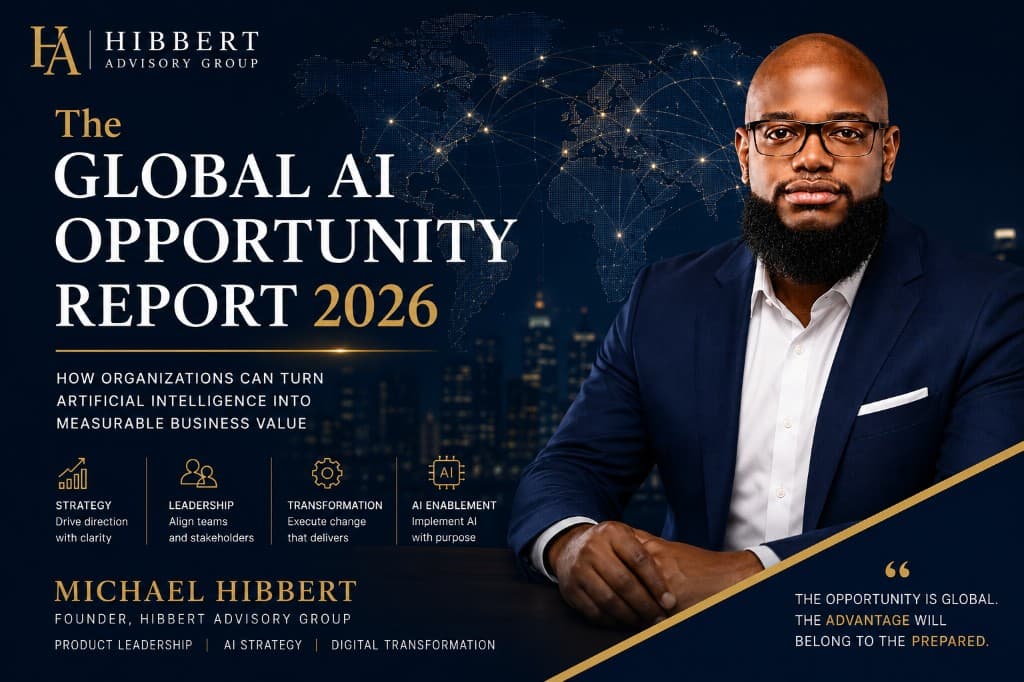
Cover of The Global AI Opportunity Report 2026 by Michael Hibbert, Hibbert Advisory Group — executive research on global AI strategy and business value

Executive Research · 2026 Edition

The Global AI Opportunity Report 2026

A strategic assessment of where AI creates measurable business value—and how leadership teams can move from experimentation to enterprise impact.

By Michael Hibbert, Founder, Hibbert Advisory Group

Request the report through our consultation intake. We will follow up with the PDF download and scheduling options for a strategic discussion.

Inside the report

  • Executive summary with strategic recommendations for 2026
  • Current state of AI adoption and executive sentiment
  • Hibbert AI Readiness Framework with scoring methodology
  • Six value categories with use cases, benefits, and common mistakes
  • Industry analysis across nine sectors
  • Agentic AI: implications, risks, and adoption considerations
  • Global perspectives across seven regions
  • Why AI initiatives fail—and how to avoid it
  • 30-day, 90-day, 180-day, and 12-month transformation roadmaps
  • Executive action plan with investment priorities

48

Pages

12

Sections

11

Visuals

Executive Summary

Artificial intelligence has moved from experimental curiosity to board-level mandate. In 2026, the question facing CEOs, founders, and executive teams is no longer whether to invest in AI—it is where to invest, how fast to move, and how to convert capability into measurable business outcomes.

This report synthesizes adoption patterns, executive sentiment, industry dynamics, and transformation roadmaps observed across engagements with leadership teams in North America, Europe, the Middle East, and Asia-Pacific.

  • 78% of enterprises have active AI initiatives; only 29% report measurable enterprise-wide impact
  • AI is a business capability—not a technology initiative—that reshapes revenue, service, and capital allocation
  • Five structural causes trap most organizations in the pilot plateau
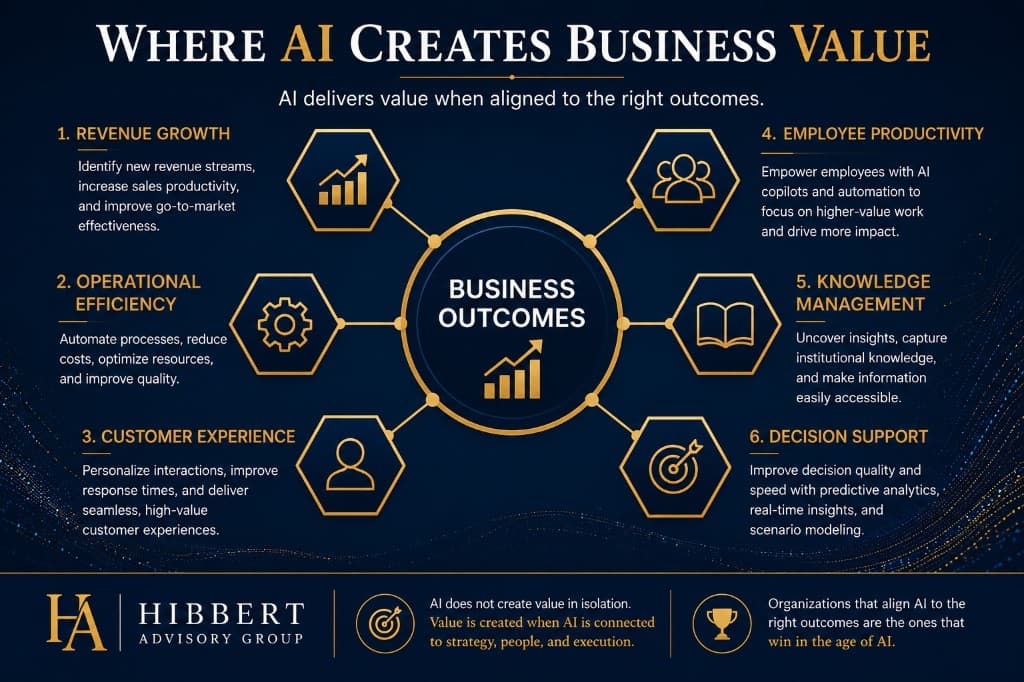
  • Six value categories define where AI creates durable competitive advantage
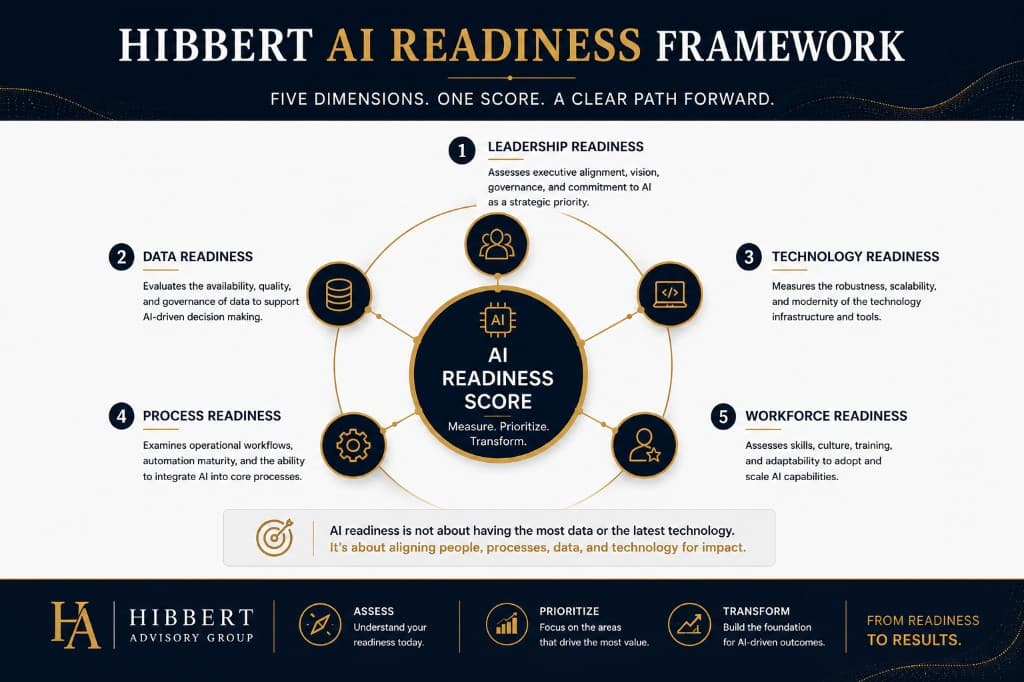
  • The Hibbert AI Readiness Framework provides a scoring methodology across five dimensions

Download PDF

Request the full 48-page executive report through our consultation intake. We will follow up with the PDF download and scheduling options for a strategic discussion.

Download PDF — Request ReportRead Online

Key findings

  • The adoption–impact gap is widening

    Organizations are adopting AI faster than they are creating measurable enterprise value. The gap reflects readiness, prioritization, and execution discipline—not model capability.

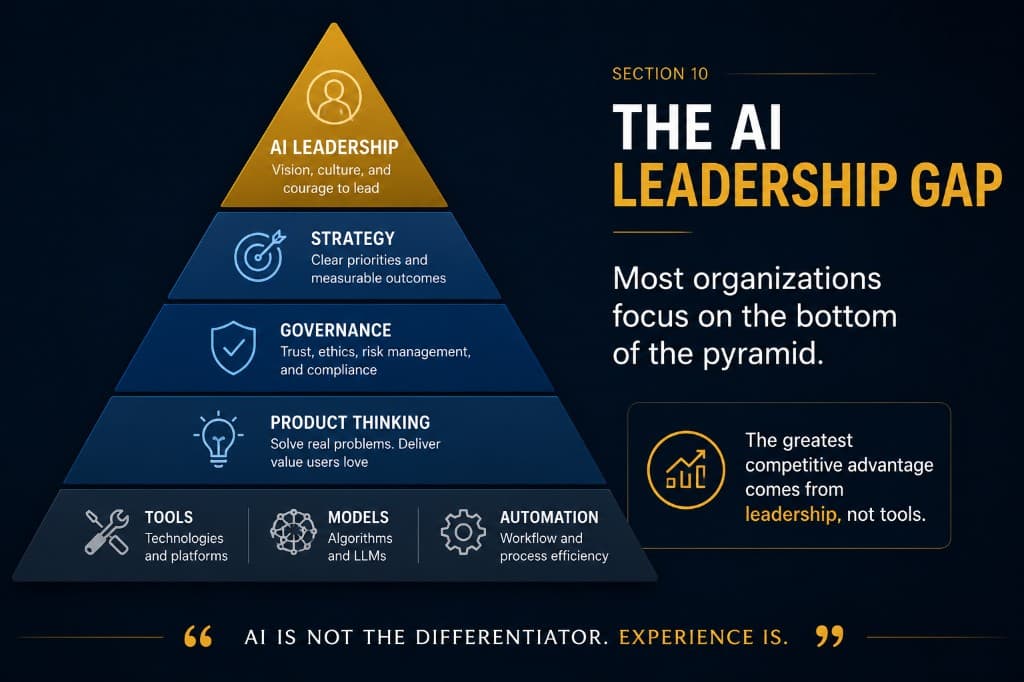
  • Leadership determines outcomes

    Organizations with executive sponsorship, governance, and product thinking outperform those investing primarily in tools and platforms.

  • Readiness precedes scale

    Composite readiness scores below 2.5 indicate foundational gaps that will stall scaled deployment regardless of technology investment.

  • Industry context matters

    AI opportunity, risk profile, and governance requirements vary significantly across nine sectors analyzed in this report.

  • Roadmaps must be sequenced

    30-day, 90-day, 180-day, and 12-month transformation horizons provide actionable sequencing calibrated to organizational readiness.

  • Agentic AI requires governance maturity

    Autonomous workflow applications demand higher governance thresholds than assistive AI—organizations should evaluate readiness before adoption.

Report visuals

Executive infographics and frameworks from the Global AI Opportunity Report 2026.
Cover of The Global AI Opportunity Report 2026 by Michael Hibbert, Hibbert Advisory Group — executive research on global AI strategy and business value
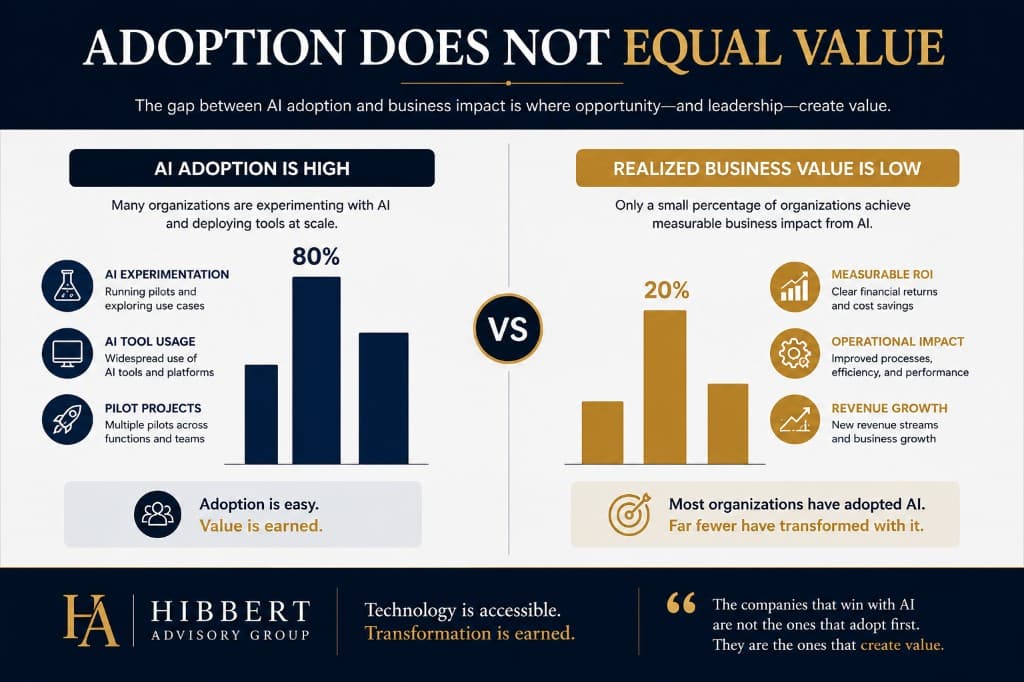
Infographic comparing high AI adoption rates with low realized business value — adoption does not equal value
Many organizations have adopted AI tools. Far fewer have translated adoption into measurable business outcomes.
Hibbert AI Readiness Framework diagram showing five dimensions — leadership, data, technology, process, and workforce readiness — surrounding a central AI readiness score
The Hibbert Advisory AI Readiness Framework evaluates organizational readiness across leadership, technology, workforce, process, and data dimensions.
Framework diagram showing six areas where AI creates business value — revenue growth, operational efficiency, customer experience, employee productivity, knowledge management, and decision support
The most valuable AI initiatives occur where strategy, leadership, execution, and technology intersect.
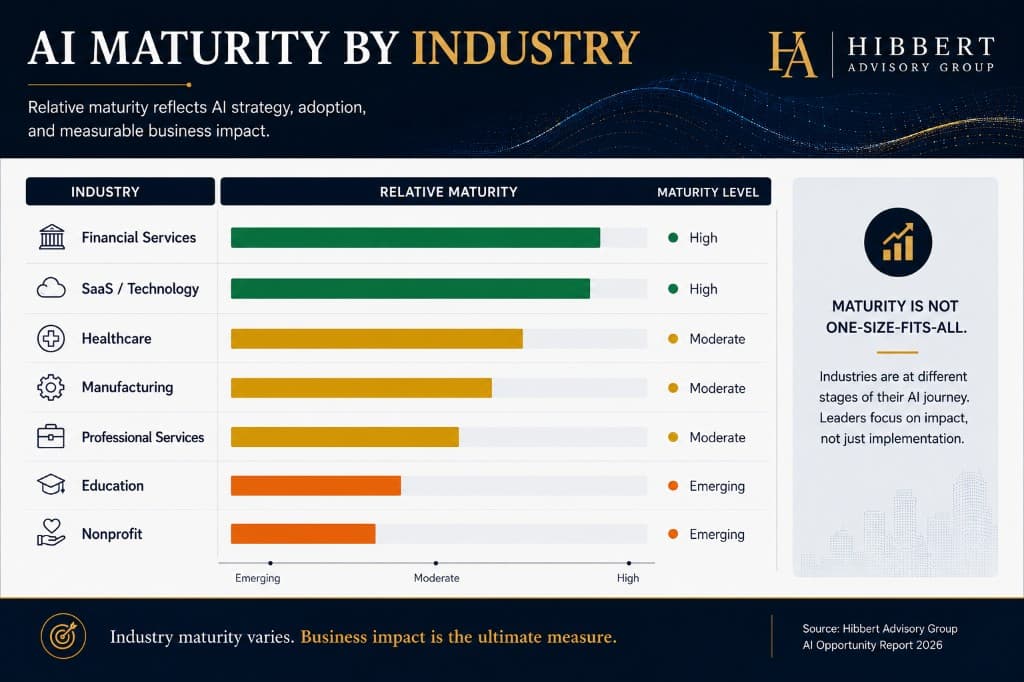
Bar chart of AI maturity by industry — financial services and SaaS lead, healthcare and manufacturing moderate, education and nonprofits emerging
AI adoption and organizational maturity vary significantly across industries.
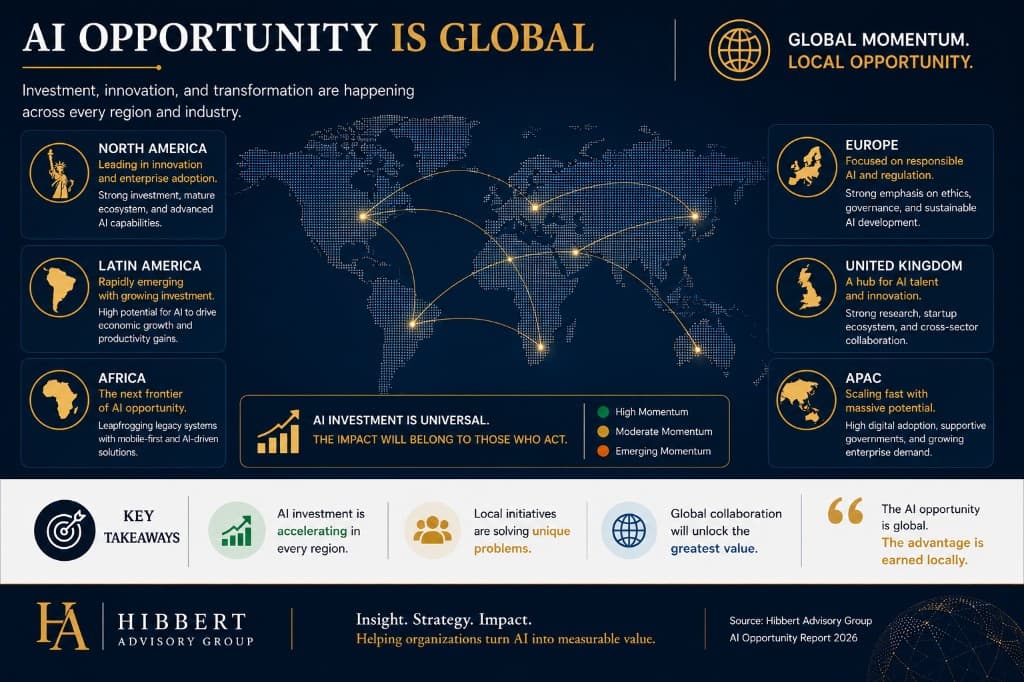
World map infographic showing AI opportunity and investment momentum across North America, Europe, LATAM, Middle East, Africa, and Asia-Pacific
AI investment, innovation, and transformation opportunities are expanding across every major region.
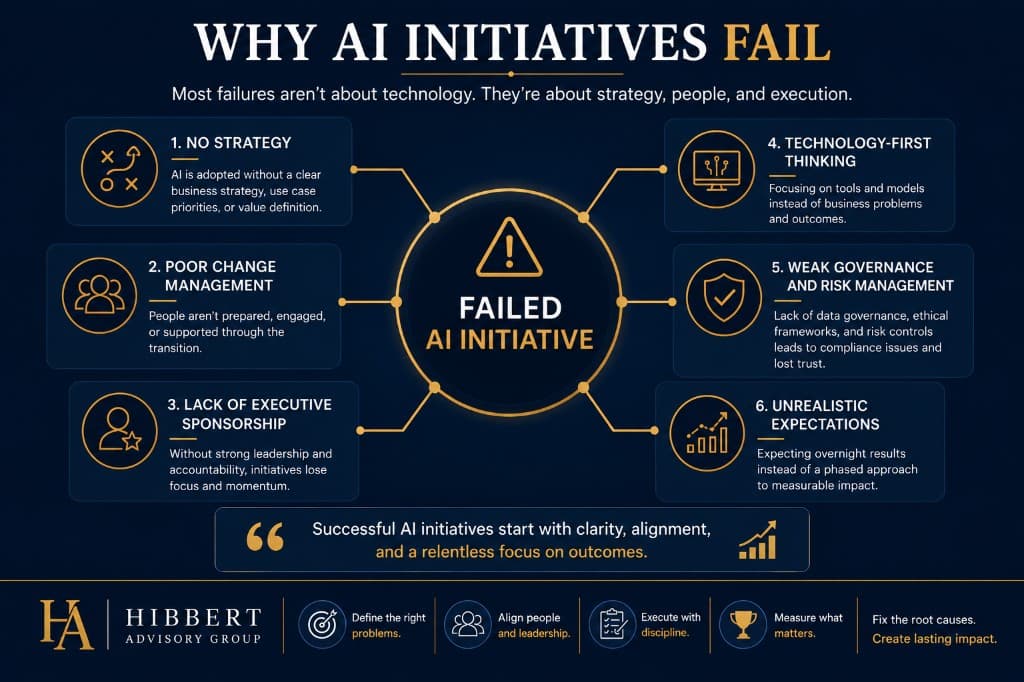
Infographic identifying six root causes of AI initiative failure — no strategy, poor change management, lack of executive sponsorship, technology-first thinking, weak governance, and unrealistic expectations
Most AI failures are not technology failures. They are failures of strategy, governance, leadership, and execution.
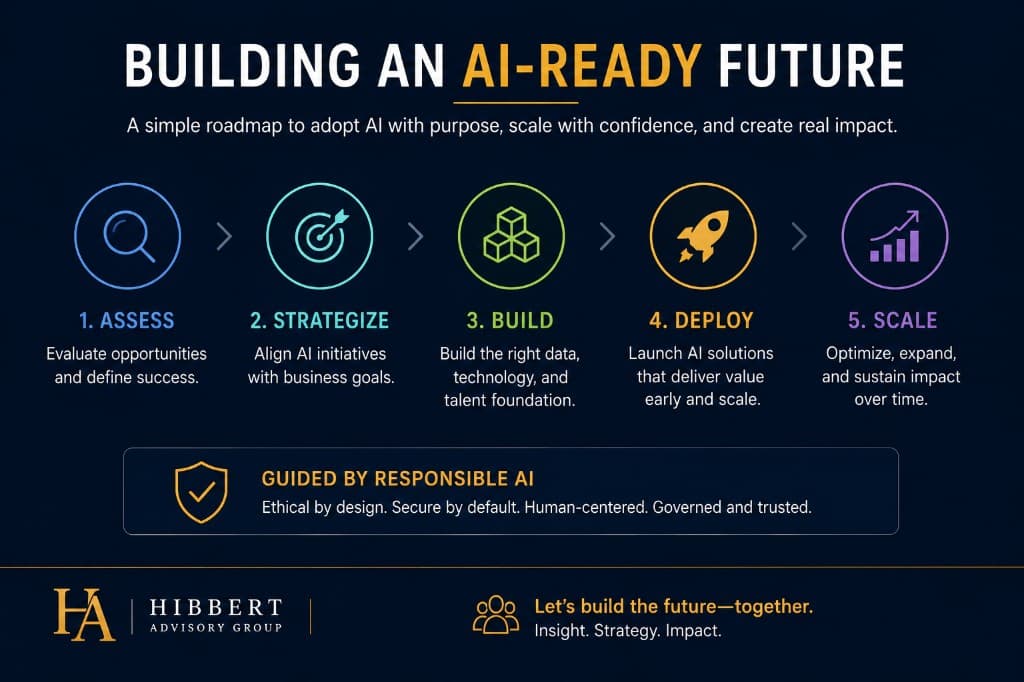
Five-step AI adoption roadmap — assess, strategize, build, deploy, and scale — guided by responsible AI principles
Organizations should approach AI adoption as a strategic journey rather than a technology deployment.

Designed for leadership teams

Written for CEOs, founders, product leaders, CIOs, CTOs, business owners, executives, and investors who need clarity—not hype—on where AI creates competitive advantage.

CEOsFoundersProduct LeadersCIOsCTOsBusiness OwnersExecutivesInvestors

Ready to Identify Your AI Opportunities?

Request a consultation and discover how AI can create measurable value for your organization.

Request a Consultation