
Over the last two years, I've watched thousands of professionals reposition themselves as AI consultants, AI strategists, prompt engineers, AI transformation experts, and fractional AI advisors.
I understand why.
Artificial Intelligence has fundamentally changed how organizations think about productivity, growth, customer engagement, product development, and operational efficiency. Every executive team is discussing it. Every board is evaluating it. Every business owner is wondering whether they are falling behind.
But there is a reality that many organizations are beginning to discover:
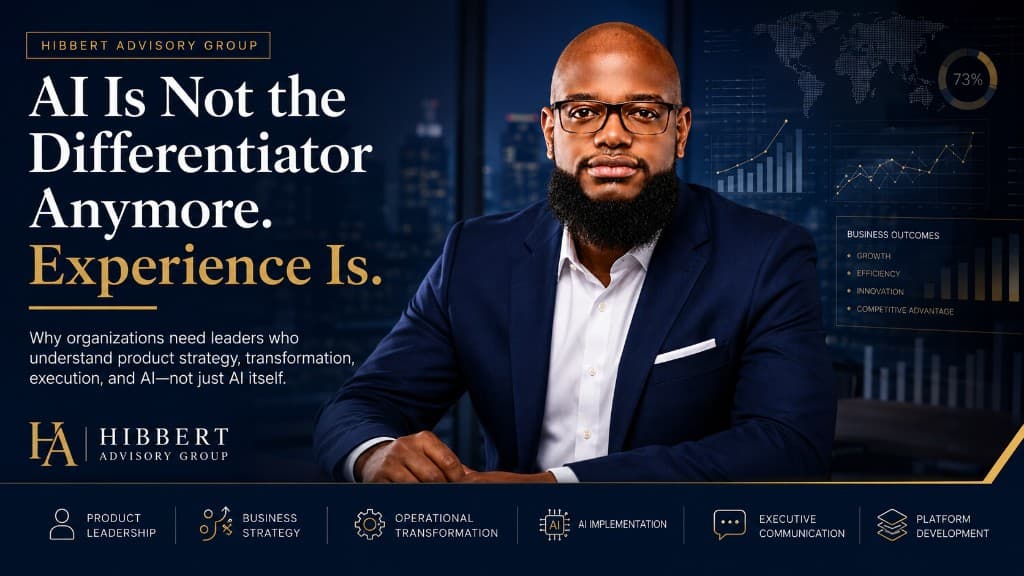
AI is not the differentiator anymore.
Access to AI is.
Understanding AI is.
Applying AI is.
Creating business value with AI is.
Those are very different things.
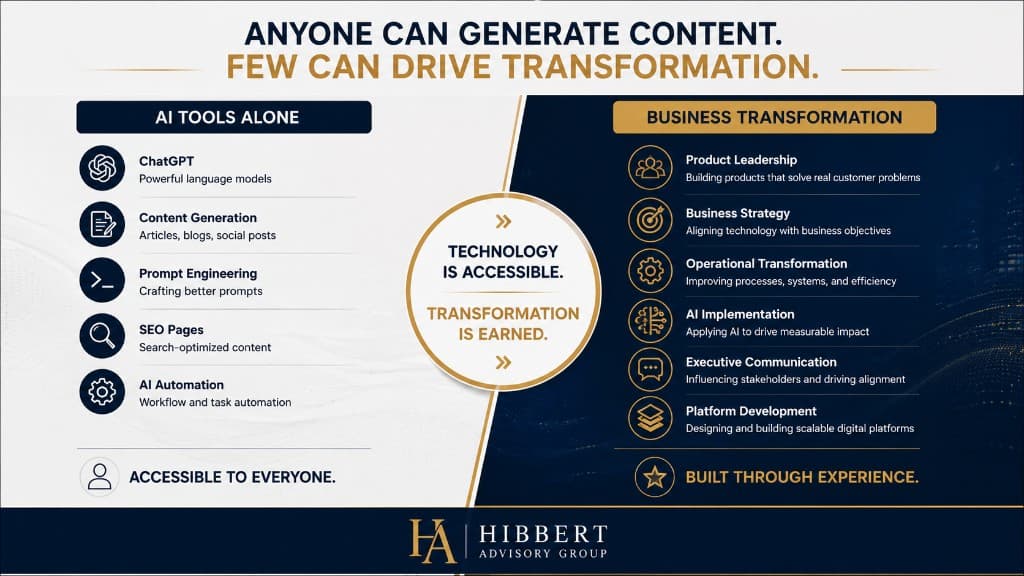
Today, anyone can ask ChatGPT to create a website, generate a business plan, write an article, produce marketing content, build SEO pages, or even develop software. The barriers to creating content and launching services have been dramatically reduced.
What has not changed is the value of experience.
Organizations do not struggle because they lack access to AI tools.
They struggle because they lack clarity around where AI fits within their business.
They struggle because they don't know which opportunities matter.
They struggle because they don't know how to prioritize investments.
They struggle because they don't know how to lead change.
And they struggle because technology initiatives often fail long before the technology itself becomes the problem.
That is where experience matters.
The organizations creating the most value from AI are not necessarily the organizations with the most advanced technology.
They are the organizations with leaders who understand strategy, execution, operations, products, customers, and organizational change.
AI is simply one component of a much larger equation.
Throughout my career, I have had the opportunity to work across product leadership, digital transformation, operational strategy, mobile platforms, enterprise software, streaming media, and emerging technologies.
I've participated in initiatives involving organizations such as The New York Times, Paramount Global, CBS Radio, Penton Media, and numerous technology and transformation engagements.
Those experiences taught me something that remains true regardless of the technology trend of the moment:
Technology rarely creates value on its own.
People create value.
Processes create value.
Execution creates value.
Leadership creates value.
Technology simply amplifies those things.
This is why I believe organizations should be cautious when evaluating AI advisors, consultants, and transformation partners.
The question should not be:
"How much AI experience do they have?"
The question should be:
"Can they help us identify meaningful business opportunities, prioritize investments, execute effectively, manage organizational change, and deliver measurable outcomes?"
Because AI implementation is not simply a technology exercise.
It is a business exercise.
It requires understanding:
- Product strategy
- Customer behavior
- Operational workflows
- Organizational design
- Executive communication
- Change management
- Business economics
- Technology implementation
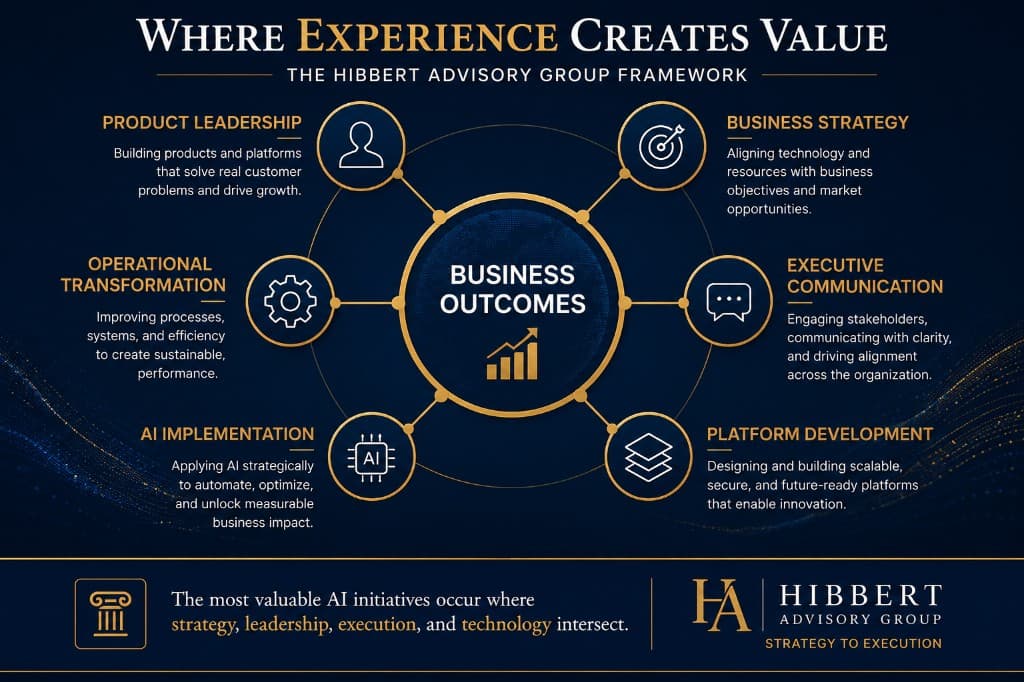
Very few professionals have spent years operating across all of those disciplines.
Many can explain AI.
Far fewer can connect AI to business outcomes.
Far fewer can lead organizations through transformation.
And even fewer have built products, launched platforms, managed budgets, aligned stakeholders, and executed large-scale initiatives while navigating uncertainty.
The future belongs to organizations that can successfully combine technology, strategy, and execution.
Not technology alone.
Artificial Intelligence will continue to evolve.
Models will improve.
Tools will change.
Platforms will emerge and disappear.
What will remain valuable is the ability to identify opportunities, make sound decisions, align teams, execute effectively, and create measurable business outcomes.
That is why I do not view AI as a standalone discipline.
I view it as part of a broader responsibility: helping organizations identify, prioritize, and execute initiatives that drive growth, efficiency, innovation, and competitive advantage.
The most successful organizations will not be the ones that adopt the most AI.
They will be the ones that apply it with purpose.
And purpose always begins with leadership, strategy, and execution.
Selected Experience
Representative engagements illustrating how product leadership, transformation, and AI-enabled initiatives translate into measurable business outcomes.
New York Times
Mobile Product Expansion
Expanded the New York Times mobile portfolio from a single application to four distinct mobile experiences supporting audience growth, engagement, and digital subscription initiatives.
- Challenge
- The organization needed to extend mobile reach beyond a single flagship application to support audience growth, subscription performance, and differentiated reader experiences across mobile contexts.
- Strategic approach
- Assessed audience needs, usage patterns, and subscription drivers across mobile surfaces
- Leadership role
- Directed mobile product strategy across multiple application initiatives
- Business outcomes
- Expanded mobile portfolio from one application to four customer-facing experiences
- Lessons learned
- Portfolio expansion succeeds when each product has a distinct value proposition tied to measurable audience outcomes
Paramount Global
Global Streaming & OTT Transformation
Helped launch and scale streaming experiences across multiple Paramount brands, contributing to global OTT initiatives supporting millions of viewers.
- Challenge
- Paramount needed to accelerate streaming product delivery across multiple brands while aligning global stakeholders on platform strategy, launch priorities, and international rollout requirements.
- Strategic approach
- Mapped brand-specific streaming requirements against shared platform capabilities
- Leadership role
- Led OTT product strategy across brand and platform initiatives
- Business outcomes
- Contributed to launch and scale of streaming experiences across Paramount brands
- Lessons learned
- Multi-brand streaming strategies require explicit platform principles and brand-specific execution paths
CBS Radio
Digital Transformation & Revenue Operations
Led strategic initiatives supporting digital transformation efforts, operational efficiency improvements, and large-scale budget management.
- Challenge
- The organization faced pressure to modernize operations, improve efficiency, and align technology investments with revenue performance across a complex broadcast and digital portfolio.
- Strategic approach
- Assessed operational workflows, technology constraints, and revenue dependencies
- Leadership role
- Led transformation initiatives connecting product, operations, and technology priorities
- Business outcomes
- Advanced digital transformation initiatives with clearer executive ownership
- Lessons learned
- Transformation programs require visible executive sponsorship and operational accountability
Penton Media
B2B Product Innovation
Led development of digital aviation industry products and API-driven solutions that generated measurable business value and new revenue opportunities.
- Challenge
- Penton needed to evolve legacy publishing models into digital products and API-driven platforms that could generate new revenue in specialized B2B markets.
- Strategic approach
- Identified high-value customer workflows suitable for digital product and API extension
- Leadership role
- Directed product strategy for aviation industry digital solutions
- Business outcomes
- Delivered digital aviation products with measurable business value
- Lessons learned
- B2B platform growth requires deep industry workflow understanding—not generic product patterns
JobFit AI
AI-Powered Career Intelligence Platform
Designed and launched an AI-driven career intelligence platform leveraging generative AI, automation, skills analysis, and executive career development workflows.
- Challenge
- The organization sought to build a differentiated career intelligence platform that applied generative AI and skills analysis to executive career development in a credible, outcomes-oriented product experience.
- Strategic approach
- Identified high-value user workflows for AI-assisted career intelligence and skills analysis
- Leadership role
- Defined AI product strategy and platform vision
- Business outcomes
- Launched an AI-driven career intelligence platform with generative AI capabilities
- Lessons learned
- AI product credibility depends on workflow design and outcome clarity—not model novelty alone

About the Author
Michael Hibbert
Founder, Hibbert Advisory Group
Michael Hibbert is a product, strategy, and transformation leader with experience spanning enterprise software, media, digital platforms, AI-powered products, and organizational transformation initiatives.
Areas of Expertise
- AI Strategy
- Product Leadership
- Digital Transformation
- Executive Advisory
Recommended Services
Move from insight to action. Hibbert Advisory Group helps leadership teams translate strategic questions into prioritized initiatives with measurable outcomes.
AI Opportunity Assessment
Identify and prioritize high-value AI initiatives with executive-ready recommendations and a practical roadmap.
Learn more →AI Strategy & Roadmap
Develop governance, adoption strategy, and implementation roadmaps leadership teams can fund and measure.
Learn more →Fractional Product Leadership
Executive product direction, roadmap governance, and cross-functional alignment without a full-time hire.
Learn more →Digital Transformation Advisory
Modernization planning across process, technology, and organizational readiness with measurable outcomes.
Learn more →
Ready to Identify Where AI Can Create Value in Your Organization?
Whether you are exploring AI opportunities, digital transformation initiatives, product innovation, or operational efficiency improvements, Hibbert Advisory Group can help you identify practical paths forward.
Request a Consultation